Translations of the Speeches from the Festive Service at Stockholm Cathedral
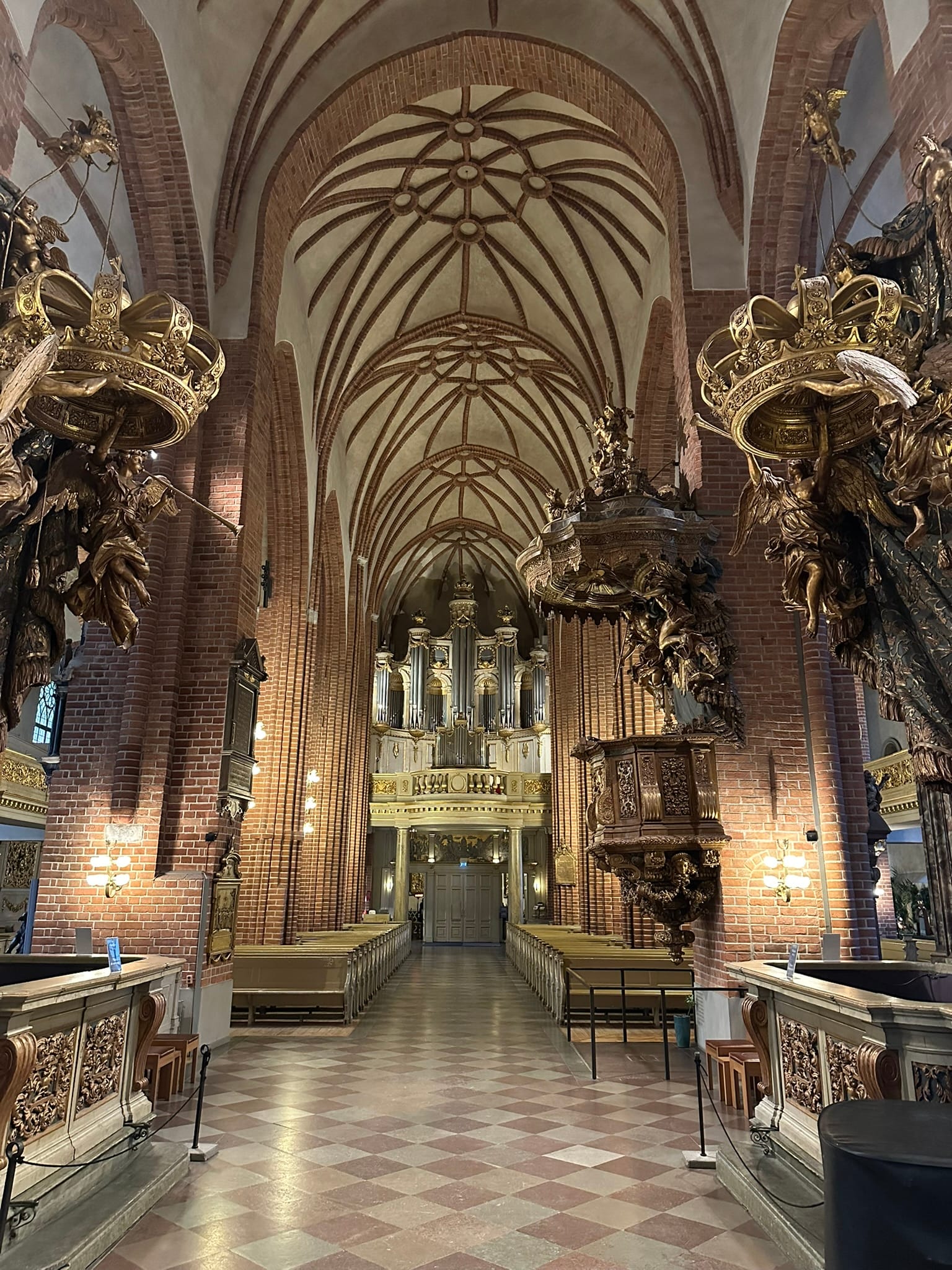
Den ekumeniska veckan i Stockholm avslutas med Högtidsgudstjänst i Storkyrkan i Gamla stan, under närvaro av kungaparet och statsministern. Medverkar gör bland andra biskop emeritus Jonas Jonsson, Sofia Camnerin generalsekreterare i Sveriges kristna råd, pastor Lisa Fredlund, Evangeliska frikyrkan, den ekumeniska patriarken Bartholomeus I av Konstantinopel och ärkebiskop Flavio Pace, från Vatikanen. Nedan finns översättningarna till engelska respektive svenska.
Bishop emeritus Jonas Jonsson, Church of Sweden
Translation to English
All of Stockholm’s church bells tolled when a procession of priests, bishops, church leaders and patriarchs poured into the cathedral. They came from many countries, dressed in holy vestments, bishops with mitra on their heads and carrying their crosiers, the shepherds crook. Some of them are grieving over sons they have lost or are afraid of new outbreaks of pogroms. Others look back with regret to a time when national churches permeated society with Christian values. Some are eagerly awaiting the imminent kingdom of God.
They were pilgrims who had left hundreds of years of isolation and disbelief against other churches behind them. They said to each other: “Let us go up to the mountain of the Lord, He will teach us to follow His ways”. They had travelled over land and sea in order to renew their fellowship in faith and renegotiate the church’s mission from the spiritual, moral and social confusion that the First World War had created.
The church’s ecumenical vision that would renew Christian unity, was born in Stockholm. The church leaders listened to Jesus’ prayer,” …that they all shall be one”. They prayed for the leading of the Holy Spirit voicing the thousand-year old Pentecostal antiphon Veni Sancte Spiritus. They heard the challenge of the gospel: Do better! Change your state of mind. Choose a new perspective! Look at the world in a new way! The triune God blessed their meetings with peace.
Walls of nationalism, confession and language were broken down. Orthodox Christians cooperated with protestants for the first time. Friendship and trust grew through times of discussion, participation in church services and enjoying meals together. Wounds were healed, twists of bitterness were resolved. The churches’ ethical responsibility was widened to encompass every living soul in the whole world. The Christians’ spiritual unity showed that it was strong enough to shoulder the work for unity, peace and social justice. The Stockholm conference was a turning point in the history of the church.
Many would remember the high mass held in Engelbrekt church where everyone was invited to partake in communion. Christians from many churches, experienced the joy that arises from their diversity, participated for the first time in unity by taking the sacraments together – the angels surely sang!
At the final service in Uppsala cathedral, the patriarch Photios of Alexandria, came forward from the chancel. With a warm voice, he read the Nicene creed confession of faith in Greek. He bridged the era of time between the Ecumenical Council of Nicaea in the year 325 and the Stockholm conference. A tremor went through this great church gathering. The visible unity of the churches stretched out through both time and space. This was truely the work of the Holy Spirit.
Sofia Camnerin, Secretary General, the Christian Council of Sweden
Translation to English
There are three sections within a service or mass that include references to the past, the present and the future. We will consider the present time. Where does the development of ecumenism stand today? John 17:21-23.
I pray that all of them may be one, Father, just as you are in me and I am in you. May they be in us so that the world may believe that you have sent me. I have given them the glory that you gave me, that they may be one as we are one – I in them and you in me – so that they may be brought to complete unity. Then the world will know that you sent me and have loved them even as you have loved me.
God is near us now. At this present time – each one of us wherever we are – God continues to create the world, enables every breath we take, sends his Spirit, loves the world to the extent of bringing about unity and reconciliation. This is happening right now, even though at times, it seems to be going in the opposite direction. It is a kind of protest movement that we are invited to take part in. And now we are here, in the same situation as we did 100 years ago, gathered together from all parts of the world. We meet because we are called to do so and because the world needs it. Today and in the past, Jesus prays for his disciples to become one, so that the world will believe. The prayer for unity and love is constantly being prayed. Jesus prays to the Father that the disciples will be one, as God himself is one, a fellowship within the trinity, which means that unity is about being, to accept that which is already true. We shall not invent unity but rather discover it.
The ecumenical movement has responded to Jesus’ prayer and continues to respond today. Everything that the church can do together should be done together, where the focus is on the needs and difficulties in the world. Ecumenism concerns the whole world. Here in Sweden, the churches meet within the Christian Council of Sweden: the Orthodox and Eastern churches, the Catholic church, the Lutheran churches, and the different free churches. They do this in response to the prayer of unity and because unity is necessary to meet the needs of the world. Unity, relationships and fellowship are ways to build peace however slowly, but is particularly powerful in times characterized of the exact opposite: violence and exploitation – of creation, of people, taking resources at the cost of depriving others, using violence which leads to the extreme act of war, bomb attacks, murdered children and even suspicion that results in a we-them egoism: the exact opposite of unity.
In a service such as this, we can open ourselves to a unity where we confess that the promise of God’s glory is near at hand, freedom in Jesus Christ, and the love that binds us together.
For it is love that is contained within unity. There needs to be much more love in the world, less hate. Not a lenient fluffy rose-coloured love, but a love that fights against evil, that is not afraid of other opinions, that is mutually respectful, that allows and welcomes differences. “Love is justice carried out in the public sphere”, said Cornel West (professor in philosophy at Union Theological Seminary). We all are called to accept that love, allow it to enfold our own lives and hearts. There is a need today in our ecumenical movement, a little more love between us, between churches, love that reaches out, works together with all the goodwill we have with other denominations so that justice will prevail.
Amen.
Pastor Lisa Fredlund, Evangeliska frikyrkan
Translation to English
I see Him coming over the fields, He comes to meet us.
One day He will wander over the battlefields that harvested so many lives.
He will speak to the dry earth giving it life again, just as He did at the moment of creation.
He will liberate all the birds from their cages, and they will spread their wings like glitter over heaven.
All the neglected animals will run free.
He will breathe over the sea and once again it will sing from the depths.
He will whisper to the mothers whose children died too early that they will meet again.
We will hear His voice when He calls our name.
He WILL wipe away every tear from their eyes. (Revelation 21:4)
BUT until this happens, shall we, you and I, God’s people the church, be His presence here on earth. We need to take courage!
In a time that is marked by divisions, powerlessness, darkness, polarization, nights alone, we shall experience God’s peace. Not only peace but also God’s celebration! We are to be a movement and a voice from another direction, a place of deeper joy. The secret movement of the gospel has always come from a different direction. The crib in the stable, the child, the cross, the women, the outcasts, the church.
The picture in the Bible of the mustard seed, so insignificant, the least of all seeds, yet growing into a tree that gives protection for many. (Mark 4:31ff) A place where one can find a refuge. A place where people can get another chance, a place for people to come together, a place where one does not give up. A place that is protection for many types of birds. He comes to meet us in this other place.
So will it be with the resurrection of the dead. The body that is sown is perishable, is raised imperishable. (1 Corinthians 15:42)
Before he comes, we shall celebrate all victories, both big and small.
The child that has started school, who loses his first tooth. The man who breaks free from addiction, the teenager who finds direction in life, the woman who finds a deeper meaning than the hopeless searching for the next designer bag.
The kind of fellowship we desire should be available for everyone. We will rejoice in a fellowship that keeps our hearts soft. We need this kind of preparedness in these times so that our hearts remain soft and not hard, frozen or cold.
Blessed are the poor in heart, for they will see God. (Matthew 6:8) When he comes over the field?
The Great Commission – Jesus said: ”Go out”
Jesus said, ”Go out!” (Matthew 28:19)
We should stop being afraid of each other or fear that we would lose what we believe we own. He has always reached out to the whole world. The gospel is free. It costs nothing.
We should work together despite our differences, with goodwill that enables us to go in the same direction. We should find the courage to meet others we don’t normally meet within our own circles. Jesus was not afraid to lose either himself or his reputation when meeting people – he stood firm in his position.
We should go to those places where no one else will go. We should set up our tent there, not just to visit or give a passing glance, but give time to understand.
Blessed are the peacemakers, for they shall be called the children of God. (Matthew 5:9)
There was once a group of people who looked at one another straight in the eye. Their glances were clear, their backs straight, their fragrance as the cherry and lilac trees. They were the church. And when Jesus returns, they are ready.
Amen
His All-Holiness Ecumenical Patriarch Bartholomew I
Översättning till svenska
”Låt oss be för hela världens fred, Guds heliga kyrkors bestånd och allas enhet.”
Kära bröder och systrar i Herren,
Detta är en av de första förbönerna i de gudomliga liturgierna av den helige Basileios den Store och den helige Johannes Chrysostomos, vilka har firats i de ortodoxa kyrkorna i över sjutton sekel. Enhet och fred har varit grundläggande och utmärkande kännetecken för Jesu Kristi lärjungar allt sedan den apostoliska tiden. Och om vår tidsålder kommer att bli ihågkommen, så blir det kanske för dem som helgade sina liv åt den förenande fredens sak. Som övertygade och hängivna kristna är vi kallade att ”sträva efter det som tjänar friden.” (Rom 14:19)
Försoning och fred kräver en radikal förändring av det som i allt högre grad blivit det normala sättet att leva i vår värld. Inre frid och global fred är det unika sättet att bryta våldets och orättvisans kretslopp. Ja, fred och enhet är resultatet av såväl individers som institutioners val – liksom av förändring. De är i grund och botten frön till hjärtats och sinnets omvändelse, det vi kallar metanoia, som innebär en väsentlig förvandling av både personliga vanor och politiska beslut. Fred kräver i slutändan offer och mod, så att vi kan bli förvandlingens gemenskaper, där ”Kristus formas i oss” (Gal 4:19) och vi ”formas efter hans sons bild” (Rom 8:29). Och det finns två sätt på vilka vi uppfattar och utövar denna fred:
(i) För det första: den fred som kommer ovanifrån (Jak 3:17), som inte är av denna världen (Joh 14:27), och som övergår allt förstånd (Fil 4:7), flödar ur tystnadens och bönens djup. I Abba Isak Syrierns ord: ”Om du gör fred med dig själv, så skall himmel och jord göra fred med dig.” Denna slags fred gör det möjligt för oss att ”älska våra fiender och göra gott mot dem som hatar oss” (Luk 6:27). Aldrig tidigare har den förenade kristenhetens röst behövts så mycket som nu. Fredsskapande är oskiljaktigt förbundet med både mänsklig samexistens och vår planets överlevnad. Det återspeglas i hur vi behandlar varandra och hur vi behandlar naturen och miljön. Hur vi beter oss mot och respekterar varandra speglar – och påverkar – hur vi bemöter resten av skapelsen. Vi har makten att bidra antingen till världens läkedom eller till dess lidande. Kära vänner – vad kommer vi att välja?
(ii) För det andra: den fred som är vår Herres Jesu Kristi nåd (2 Kor 13:14), Andens frukt (Gal 5:22) och Hjälparens gåva (Joh 14:26), springer ur samtalets och gemenskapens vidd. Ekumeniska möten och dialog är en del av det ekumeniska patriarkatets DNA – ett oumbärligt inslag i vår längtan att uppfylla Herrens vilja att hans ”lärjungar skall vara ett” (Joh17:21). Denna öppenhet för förening och gemenskap, för enhet och samhörighet, fanns också i hjärtat hos ärkebiskopen av Uppsala, Nathan Söderblom. Han var en visionär och pionjär inom ekumeniska rörelsen redan innan dess formativa period, ”fredens biskop”, djupt vördad av den lutherska kyrkan och mottagare av Nobels fredspris. Hans tid och initiativ blev grund och föregångare för Kyrkornas världsråd och de nationella kristna råden över hela världen.
Kära vänner,
Den fred som föds ur enheten är just vad vi är kallade att minnas och fira denna kväll. Låt oss alla komma med denna fred till en värld som hungrar och törstar efter enhet, solidaritet och helhet mer än någonsin. Detta är vår innerliga bön och vårt orubbliga hopp.
Archbishop Flavio Pace, Secretary of the Dicastery for Promoting Christian Unity, Roman Catholic Church
Översättning till svenska
Ers Helighet, Ers Eminens, Era Excellenser,
Kära bröder och systrar i Herren!
Tonerna från den urgamla georgiska hymnen tillägnad Guds allheliga moder har just ljudit – både i denna vackra katedral och i våra hjärtan. De påminner oss om skönheten i Guds frälsningsplan, om gemenskapens mysterium i den heliga Treenigheten och om människans mysterium, skapad till Guds avbild och likhet. Det är ett stort mysterium av skönhet och gemenskap – samma gemenskap som Jesus bad om vid den sista måltiden, vilket vi just hörde i evangeliet. Det är den brinnande buskens mysterium – som brinner utan att förtäras – likt Guds hjärta, som aldrig tröttnar på att älska den mänsklighet han själv har skapat. Som den bysantinska liturgin ständigt påminner oss: ”O gode Gud, du människovän.” Den heliga Katarina av Siena, 1300-talsmystikern, skrev: ”Du kärlekens avgrund, det verkar som om du har blivit galen av kärlek till dina skapelser. Vad driver dig att visa sådan barmhärtighet? Kärleken!” (Katarina av Siena, Dialogen). Aposteln Paulus talar i Efesierbrevets femte kapitel om makars kärlek och kopplar den till Kristi totala självutgivelse för Kyrkan, med orden: ”Detta rymmer ett stort mysterium – jag syftar på Kristus och kyrkan” (Ef 5:32).
Det vi firar här idag och under denna ekumeniska vecka – till minne av den lyckosamma ingivelse som för hundra år sedan rörde ärkebiskop Nathan Söderblom – har sitt ursprung i Faderns hjärta, han som längtar efter sina barns enhet, barn som blivit frälsta och återlösta genom Kristi påsk. Det är Guds ”galna” kärlek som tänder kärlekens dårskap i Jesu lärjungar, lärjungar som känner smärtan i splittringen, som vill riva murar som separerar och vandra över försoningens broar – i återupptäckten av den apostoliska trons djupa rötter, som fick sin kärnfulla och mogna formulering för 1700 år sedan vid konciliet i Nicaea. Det är Anden som verkar i deras hjärtan, som formar dem och kallar dem tillbaka till den Övre salen – platsen för eukaristin och fottvagningen, som också var platsen för mötet med den Uppståndne, trots lärjungarnas flykt och otro, och platsen för Andens utgjutande vid pingsten, från vilken Kyrkans mission till jordens yttersta gränser tog sin början. Det är samma plats där Kristus tillkännagav sin frid för apostlarna, en frid som föddes ur hans lidande – frid mellan himmel och jord, frid mellan folken. Den helige fadern, påve Leo XIV, som har sänt ett budskap till denna ekumeniska vecka, upprepade dessa samma ord från Övre salen när han trädde fram på balkongen efter sin valdag den 8 maj. I sitt påvliga motto bekräftade han – i enlighet med sin fader och lärare den helige Augustinus – sin vilja att helhjärtat engagera sig för de kristnas enhet och för den mänsklighet som Gud har skapat: “in Illo uno unum – i den Ende (Kristus) är vi ett.”
I vår förundran inför Guds kärleks mysterium i Kristus får vi inte glömma att ytterligare ett mysterium haft sin plats i våra gemenskaper under kristendomens tvåtusenåriga historia – ett mysterium som tidvis tycks ha fått övertaget: mysterium iniquitatis, orättfärdighetens mysterium, då vi fallit tillbaka i själviskhet och inskränkthet, då vi har slutat att välkomna den andre, då vi har dömt utan att verkligen lyssna, då vi agerat i strid med den ordning som annars råder i skapelsen – där en källa ger upphov till en ström som växer i styrka och mynnar ut i havet, så som profeten Hesekiel beskriver vattnet som rinner från altarets sida i templet och blir till en forsande flod, full av liv, fisk och växtkraft för landet längs dess stränder. Kristna har däremot genom seklerna blivit alltmer splittrade – och först genom händelser såsom den i Stockholm 1925 började man ens tala med varandra igen. Denna vecka, medan vi erkänner de nådens under som Herren har gjort, ber vi därför om förlåtelse för splittringens synd. Och för att kunna göra ett trovärdigt fredsbudskap hörbart i en värld som lider martyrdöden genom krig, förnyar vi vårt åtagande för enhet och försoning, i återupptäckten av trons skatt. För detta ber vi – såsom vi snart kommer att be – med Jesu egen bön, han som, när han vände sig till Fadern i himmelen, lät oss förstå att vi alla är bröder och systrar.
Amen